Ever tried to set up a home theater and ended up stuck in a corner, fighting with cables and cramped space, only to realize your projector doesn’t fit or perform well in your living room? I’ve been there, and honestly, it’s frustrating. That lightbulb moment hit me when I realized that traditional projectors just aren’t designed for the modern, cozy living room environment. Instead, I discovered the magic of ultra-short throw and short throw projectors. They transformed my space and gave me a cinematic experience without sacrificing my furniture or my sanity.
Why You Need a UST or Short Throw Projector in Your Living Room
Let’s face it. Conventional projectors often require a ton of space. They need a long throw distance — meaning you need to mount them far away from the screen — which isn’t practical in most living rooms. Plus, they cast shadows when you sit in front, and finding the right wall or ceiling mount can be a hassle. That’s where UST (ultra-short throw) and short throw projectors come in. They sit just inches away from the wall, allowing you to project giant images without rearranging your furniture or sacrificing space. I’ve personally found that they make my living room feel like a mini cinema, even with ambient light sneaking in from the windows.
But choosing the right projector isn’t just about size. It’s about quality, compatibility with your environment, and ease of setup. Today, I want to walk you through how you can pick the best model for your living room, cut through the marketing hype, and avoid the common mistakes I made early on.
Is the hype around UST and Short Throw Projectors justified?
When I first started researching, I was skeptical. Are these projectors really capable of delivering the crisp, bright images I want? Or are they just a trendy gadget for small spaces? Well, I learned the hard way that not all projectors are created equal. My initial mistake was choosing a model that couldn’t handle ambient light, resulting in dull images and frustration. That’s why I’ve dug deep into the options and gathered all the tips and tricks to help you make an informed decision.
If you’ve faced similar struggles or are just tired of the traditional setup nightmares, you’re in the right place. Let’s explore how you can transform your living room into a cinematic haven with the perfect UST or short throw projector.
,
Pick the Right Spot for Your Projector
Start by choosing the optimal location for your projector. Since UST and short throw models sit just inches from your wall, measure the available space carefully. I once tried to place mine too close to a corner, which caused shadow issues. After repositioning just a few inches away from the wall and ensuring a clear line of sight, the picture instantly improved. Use a tape measure to verify minimum and maximum distances recommended by the manufacturer, which you can find in detailed reviews like here.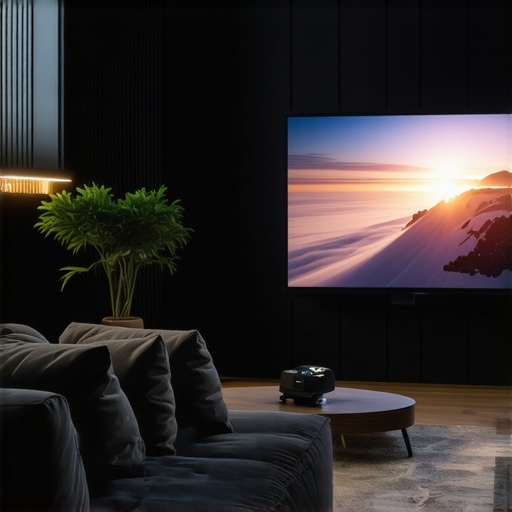
Ensure Proper Ceiling or Wall Mounting
Next, secure your projector with a stable mount or place it on a sturdy shelf. I initially tried to rest mine on a flimsy table, which led to shaky images and frequent adjustments. Once I invested in a dedicated ceiling mount, setup became straightforward, and my film nights improved dramatically. When mounting, aim for a flat, level position, and double-check the throw distance against your projector’s specs. For help choosing a mount, see this guide.
Configure Your Projection Correctly
After positioning your projector, focus on the settings. Turn on the projector and use the focus ring or digital focus adjustment to sharpen the image. Adjust keystone correction to eliminate trapezoidal distortion, which I often overlooked initially, resulting in skewed images. Use test patterns or a calibration disc for optimal clarity. Many projectors have auto-calibration features, but manual fine-tuning yields better results. For ambient light considerations, check these tips.
Optimize Your Room Environment
Ambient light impacts picture quality. I learned this the hard way when my initial setup looked washed out during daytime. Installing blackout curtains or using a semi-matte screen helped a lot. If you want a more detailed approach, see this resource. Also, arrange furniture to avoid casting shadows on the screen, and consider wall colors that reflect less ambient light. Proper room setup maximizes your projector’s brightness and contrast.
Fine-Tune the Picture for Cinematic Quality
Finally, tweak the picture settings. Increase contrast and adjust brightness so whites are bright without losing detail. If your projector supports HDR, enable it for richer colors. I experimented with different picture modes, settling on a custom setting that balanced color accuracy with vibrancy. For advanced calibration, use a colorimeter or calibration software, but even basic adjustments can significantly improve your image. For detailed techniques, visit this guide.
Many enthusiasts and even seasoned home theater aficionados often fall into the trap of oversimplifying the capabilities and limitations of ultra-short throw (UST) and short throw projectors. While these devices are revolutionary for compact living spaces, there’s a pervasive misconception that they are foolproof or suitable for every environment without nuanced consideration. Let’s dig deeper into what most people get wrong about these projectors, so you can avoid costly mistakes and truly optimize your setup.
Why Size Isn’t Everything: The Myth of Brightness and Resolution
One common misconception is that a brighter projector automatically guarantees a better picture, especially in ambient light conditions. In reality, brightness (measured in lumens) is just one piece of the puzzle. A projector with high lumens but poor contrast ratio or subpar resolution can still deliver a lackluster image. Many buyers overlook this and focus solely on specs, leading to disappointment. Experts like those behind ultrashort throw models that excel in color accuracy and contrast, not just raw brightness. Advanced image processing and the quality of the light source also significantly influence picture quality, especially in rooms with ambient light.
Don’t Underestimate the Room’s Role in Performance
It’s tempting to think that once you buy a UST or short throw projector, your room setup no longer matters. Big mistake. Room size, wall color, and lighting conditions still play pivotal roles. For instance, a semi-matte screen with proper wall color reflection can dramatically enhance contrast and vibrancy, even with a projector that has a lower lumen count. Conversely, a poorly lit room with bright walls will diminish the benefits of high-end projectors. The myth that these projectors can perform equally well in any environment is just that — a myth. Proper ambient light management remains essential.
Advanced Tip: Beware the Overhyped Resolution
Many believe that 4K resolution automatically means better viewing. While higher resolution is generally beneficial, it’s not the only factor. In fact, for projectors used in small to medium rooms, 1080p models can often deliver stunning images if calibrated correctly. The real secret lies in contrast, color fidelity, and processing capabilities, which are often neglected in marketing. For instance, some 1080p UST models are optimized with excellent color wheels and local dimming, providing images that rival pricier 4K models in real-world viewing. According to experts in the field, a well-calibrated 1080p projector can outperform a poorly set 4K if the latter is not properly configured.
Have you ever fallen into this trap? Let me know in the comments!
How do I keep my projector running smoothly over time?
To ensure your laser projector continues to deliver stunning visuals, regular maintenance is essential. First, keep the air filters clean. Dust buildup can impair cooling and cause overheating, which may reduce the lifespan of components. Personally, I schedule a quick filter check every three months, using a soft brush to gently remove dust. Next, monitor the lamp or light source if your model uses one; although laser-based projectors have longer lives, their optical components can degrade if not properly cared for. I recommend following the manufacturer’s guidelines for calibration and cleaning, which can be found in the user manual or through professional support. Regularly updating the firmware also helps fix bugs and improve performance, so check the manufacturer’s website periodically.
Investing in a quality cleaning kit designed specifically for projectors makes maintenance easier and safer. For example, I use a microfiber cloth and compressed air to gently clean the lens and vents, avoiding scratches or damage. Once a year, consider having your projector professionally serviced to calibrate color settings and check internal components, especially if you notice image quality declines or irregularities.
What tools do I recommend for projector upkeep?
For ongoing maintenance, I rely on a few key tools. A high-quality microfiber cloth is indispensable for cleaning lenses and surfaces without leaving streaks or particles. Compressed air cans help remove dust from vents and internal areas without disassembly. Additionally, a calibration disc like the Spears & Munsil HD Benchmark is invaluable for fine-tuning image settings after cleaning or firmware updates, ensuring your picture remains sharp and vibrant. For firmware updates, always download directly from the manufacturer’s site or authorized channels—this guarantees security and compatibility.
As for software, I recommend using the projector’s built-in calibration menu if available. Many models support advanced adjustments for contrast, color, and keystone correction—these can be accessed via the remote or dedicated app. When combined with hardware tools, this approach keeps your projector performing at peak levels for years.
Future trends in projector maintenance and scaling
Looking ahead, I predict more intelligent, self-diagnosing systems will become standard in high-end laser projectors. These will alert you to maintenance needs proactively, reducing downtime and prolonging lifespan. Furthermore, as more homes adopt integrated smart home ecosystems, remote diagnostics and firmware updates could become seamless, making upkeep even easier. To stay ahead, I suggest subscribing to manufacturer newsletters and joining online user groups—these communities often share invaluable tips and troubleshooting advice.
Start implementing a regular cleaning routine today, and consider upgrading your tools as part of your long-term plan. Proper maintenance not only preserves your investment but also guarantees a consistently fantastic viewing experience. For more expert tips, visit this resource.
The Hardest Lesson I Learned About UST Projectors in Small Spaces
One of the biggest surprises I encountered was realizing that not all ultra-short throw projectors handle ambient light equally well. I initially bought a model based solely on brightness specs, only to find out that contrast and color fidelity matter just as much, if not more. This taught me the importance of looking beyond marketing hype and focusing on real-world performance, especially in living rooms with lots of natural light.
What No One Tells You About Room Size and Projector Performance
Many enthusiasts assume that a powerful enough projector can overcome any room condition. I learned that even the best UST projector needs a well-thought-out environment—wall color, furniture placement, and lighting control all influence picture quality. Proper room setup can make a mediocre projector shine, while neglecting these factors can turn a premium model into a disappointment.
The Truth About Resolution and Image Quality
There’s a common misconception that 4K resolution automatically guarantees stunning pictures. I discovered that a well-calibrated 1080p projector with high contrast and excellent color processing can outperform a poorly calibrated 4K model. It’s about the overall image processing quality, not just pixel count, which is a crucial insight for anyone serious about home cinema.
My Essential Toolkit for Maintaining Top-Notch Performance
To keep my projector performing at its best, I rely on a microfiber cloth for lens cleaning, compressed air for vents, and calibration discs like the Spears & Munsil HD Benchmark. Regular firmware updates from the manufacturer also ensure I benefit from the latest performance improvements. Investing in these tools has paid off in consistently crisp, vibrant images.
Push Your Home Theater Forward Today
Transforming your living room with a UST or short throw projector isn’t just about buying the right hardware; it’s about understanding the nuances of setup, calibration, and maintenance. With patience and the right knowledge, you can create a cinematic experience right in your cozy space. Don’t wait—start experimenting with your setup today and enjoy the magic of home projection!
Leave a Reply